

Guillermo del Toro’s filmography has shown, if nothing else, a deep admiration and empathy for the monsters leading his stories. From the pulpy comic book fantasy in “Hellboy” to the creature-feature fairy tale romance in “The Shape of Water,” del Toro has always highlighted humanity first in even the most grotesque of his characters. “Frankenstein” seems like the perfect vehicle for del Toro, and while it exemplifies some of his greatest strengths, it ultimately feels as flawed as the patched-up creature at its center.
Horror isn’t at the forefront of this monster movie, as del Toro is far more concerned with the people in this story. Much of the movie plays out more like a biopic about Victor Frankenstein before The Creature is introduced. This familiar structure and ubiquity of the source material don’t do the story any favors in avoiding predictability. Yet, del Toro’s direction and the rock-solid performances from the main cast keep the story feeling consistently fresh.
While del Toro manages to keep this story compelling throughout, his messaging feels increasingly muddled, as the tone bounces back and forth between a sincere gothic fairy tale and a graphic horror film from scene to scene. Each time the film shifts between these tones, it never loses its pure entertainment value; but when a genuinely heartfelt moment is immediately preceded by a scene where The Creature is ripping apart CGI wolves, there’s a tonal whiplash that feels far too jarring.
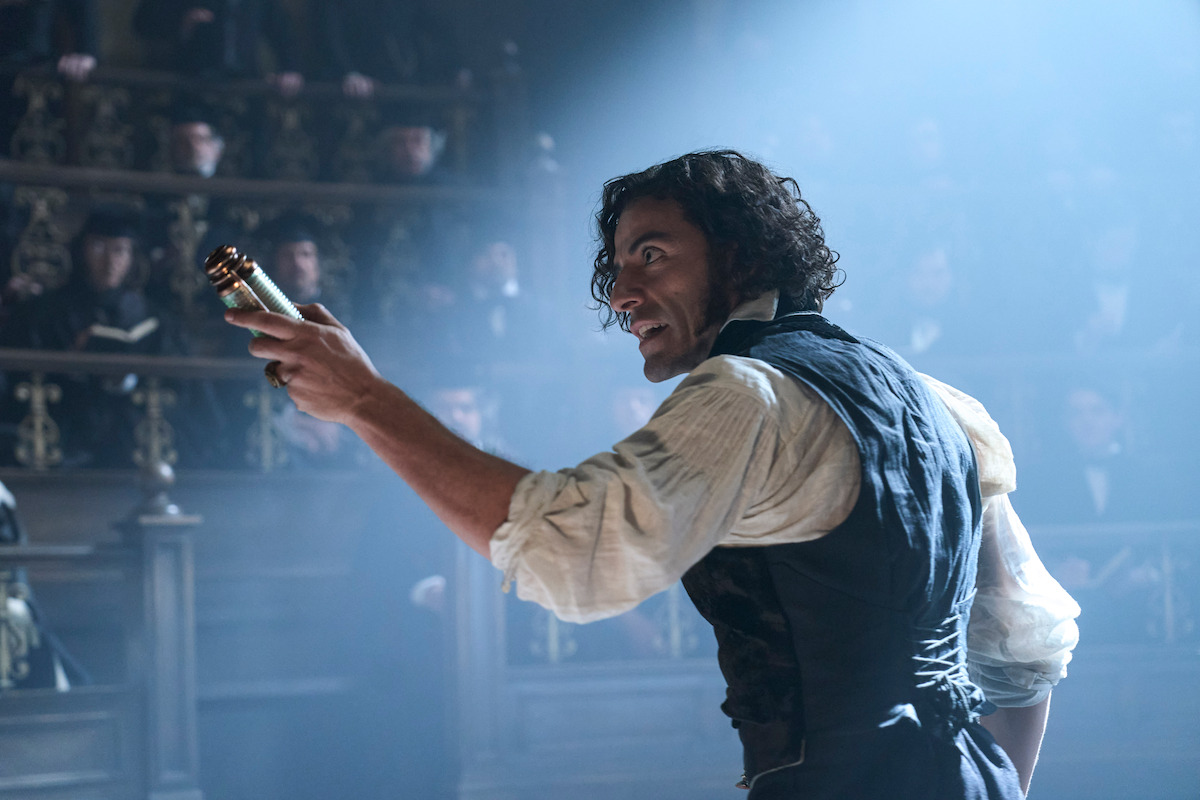
These issues are never more present than in the scenes where The Creature is formally introduced and yet, this is where the movie really starts to sing. Oscar Isaac predictably nails the manic qualities of the eponymous mad scientist while never leaving reality, but Jacob Elordi steals the show once he’s introduced as a shockingly sympathetic creature.
While a sympathetic take on Frankenstein’s monster is nothing new, there is almost nothing scary about this version of The Creature. This isn’t to say that del Toro and Elordi never portray him as a terrifying or intimidating force because when they do, it is quite effective. This story just fully leans into tragedy over horror and Elordi captures this perfectly. He manages a physicality in scenes where he can’t speak yet that feels so true to a person experiencing life for the first time while maintaining full motor functions. The way he walks around and reacts to how Frankenstein treats him feels incredibly authentic and garners sympathy quite effectively.
The supporting cast do a good job at bringing these characters to life, but the standout is Mia Goth as Elizabeth, Frankenstein’s future sister-in-law.
Christoph Waltz plays Henrich Harlander, Frankenstein’s benefactor who funds his scientific research. Waltz isn’t doing anything in his performance he hasn’t already done better elsewhere, but he is a nice addition to this film.
Goth, on the other hand, continues to prove herself as a talented dramatic actress with a real affinity for horror and the macabre. She manages to nail her more tender scenes where her empathy for The Creature is fully palpable, as well as scenes that call for more intensity. She has an agency to her character that feels like every decision made is hers and hers alone. Goth brings all of these traits to a character that feels both theatrical and authentic to reality at once.
Every scene with The Creature after he enters the main story is fun to watch, but it feels like there are story ideas for multiple movies that all could have been fleshed out far more as isolated stories. By the time the film has nearly reached its conclusion, it almost feels like it’s setting up an entirely different type of movie more akin to the 2010 South Korean revenge horror film “I Saw the Devil.” “Frankenstein” sticks the landing with its ending, but the journey there felt so uneven.
Despite how rough around the edges this movie feels by the end, there is an undeniable warmth present the entire way. Del Toro approaches this material with as much sincerity as humanly possible, and it shows in nearly every frame of “Frankenstein.” This film feels grand in a way that isn’t as common anymore amongst the sea of content churned out by Hollywood and especially a company like Netflix.
Del Toro’s new take on Mary Shelley’s iconic gothic classic isn’t a masterpiece, but the amount of empathy he has for these characters is enough to win over most audiences by the end. While the film portrays the characters as slightly exaggerated and hyper-realistic, it never oversimplifies them to more easily appeal to audiences. Frankenstein himself feels like he becomes completely unsympathetic at times, but the film isn’t as interested in purely vilifying him as it is in making the audience understand him.
While del Toro’s vision here didn’t necessarily come together in the end, his inimitable style brings this story to life in a way only he could. The flaws present almost feel appropriate, like a creator so in love with his creation, he added a few too many parts. The result is a beautiful monstrosity unapologetically wearing its heart on its sleeve.