

As the California State University System is working to renew its contract with OpenAI for ChatGPT Edu this summer, many have mixed feelings about the technology. Some are outright against it, and protesting a new OpenAI deal. The current contract with OpenAI, which ends on June 30, was agreed to in February 2025, and has cost the CSU system almost $17 million.
The University Times was not able to get a copy of the OpenAI contract in time for publication.
There is currently an “option” to extend the deal, without any further disclosures about an amount that would be spent, or the total length of the future extension, according to a CSU AI FAQ page.
The CSU did not respond to several questions not addressed in the FAQ page posed by the UT These included further details about a future contract with OpenAI, environmental concerns posed by students and questions about the Anti-AI protests held in late April.
“The CSU is still in the process of evaluating our options but remains committed to ensuring our students, faculty, and staff have equitable access to AI tools, resources, and training,” CSU Spokeswoman Amy Bentley-Smith said in a statement.
ChatGPT Edu is provided to nearly 470,000 students, and 63,000 faculty across the 22 CSUs, with free access to customization tools, language models and other features often offered through ChatGPT Pro. This access is not intended for “alumni; auxiliary; continuing education students, continuing education faculty, and auxiliary staff; or other campus community members and partners,” according to the FAQ.
Across the entire school system, there is no blanket policy that dictates how it can or can’t be used by students, professors or staff, which leaves it up to each individual and faculty syllabus for each class. However, in the place of an official policy there is what the school system calls its “AI Commons,” which has a page laying out “guidance for AI integration” for students, faculty and staff, and how the technology can be used “ethically and responsibly.”
There have been very few public discussions on the future of the CSU’s widespread AI use, beyond the systemwide survey released in early April.
“Student leaders across the CSU system are unified in calling for greater inclusion, oversight, and shared governance in the CSU AI Initiative,” Katie Karroum, the vice president of systemwide affairs for the Cal State Student Association (CSSA), said in a February letter. “An overwhelming number of students believe that student voices have been largely absent from decision-making.”
Karroum has been serving as the student representative for all CSU students in the “ongoing deliberations and decision-making processes” and the implementation of AI related policies across the school system.
This alleged lack of transparency comes even as the CSU has put together at least two AI systemwide committees, including the Generative AI Advisory Committee and the AI Workforce Acceleration Board.
While there were no systemwide surveys leading up to the partnership and contract with the CSU, the school system published its first one on April 1 this year, where it said that “ChatGPT is the most used AI tool across the CSU.”
Before the contract was agreed to, there were small surveys done across the CSU, including at Cal State LA by the Office of Institutional Effectiveness in the spring of 2024. Those surveys were done almost a year before the February 2025 deal with OpenAI.
Despite the mostly positive outlook demonstrated across the systemwide surveys and general embrace of the technology, there is a small but loud group of students and faculty calling for the CSU to not renew their contract with OpenAI, calling it “a machine of war” and “a perpetrator of genocide” across the Middle East.
In a statement by the California State University San Marcos Chapter of the Students for Justice in Palestine (SJP) and signed by several student-led groups across the CSU system saying that “The CSU’s deal with OpenAI signals a concerning shift in our institution, away from human intelligence and into a world that relies heavily upon the imprecise algorithms and misinformation that current AI models provide.”
“A deal with Open AI is in direct opposition to the CSU mission of equity, empowerment, and the CSU’s commitment to aiding students in developing their critical thinking in a time when much of their beliefs, ethics, and morals are challenged,” the letter continued.
Earlier this year, the U.S. began contracting with OpenAI for their AI services at the Pentagon, after Anthropic was blacklisted by the Trump Administration, according to several reports. Shortly after Open AI struck the deal with the DoD, they released a strict set of guidelines that would allegedly prevent Open AI’s uses for “domestic surveillance” or “autonomous weapons,” the contract said.
“Open AI harms all of us by aiding the Israeli military in continuing the genocide in Palestine, increasing surveillance of immigrant populations, taking working class jobs, contributing to social isolation and mental health issues, and harming our environment and communities,” another part of the letter said.
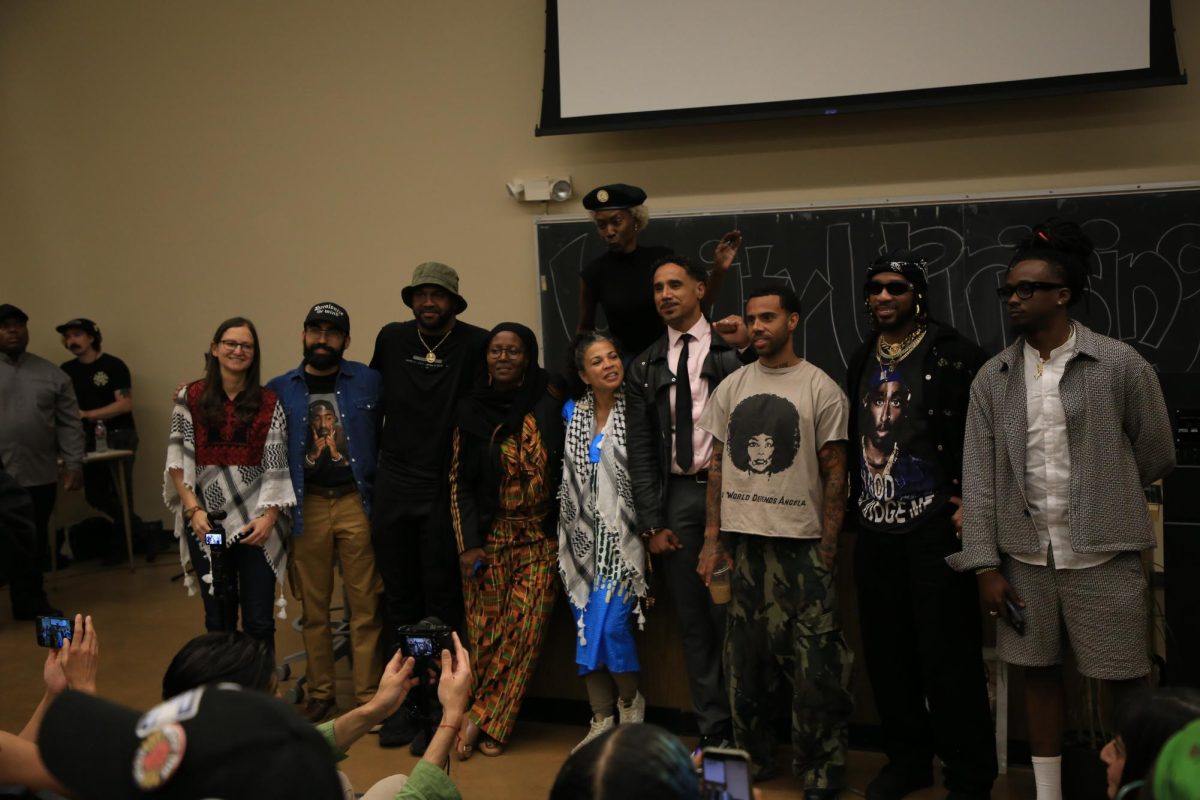
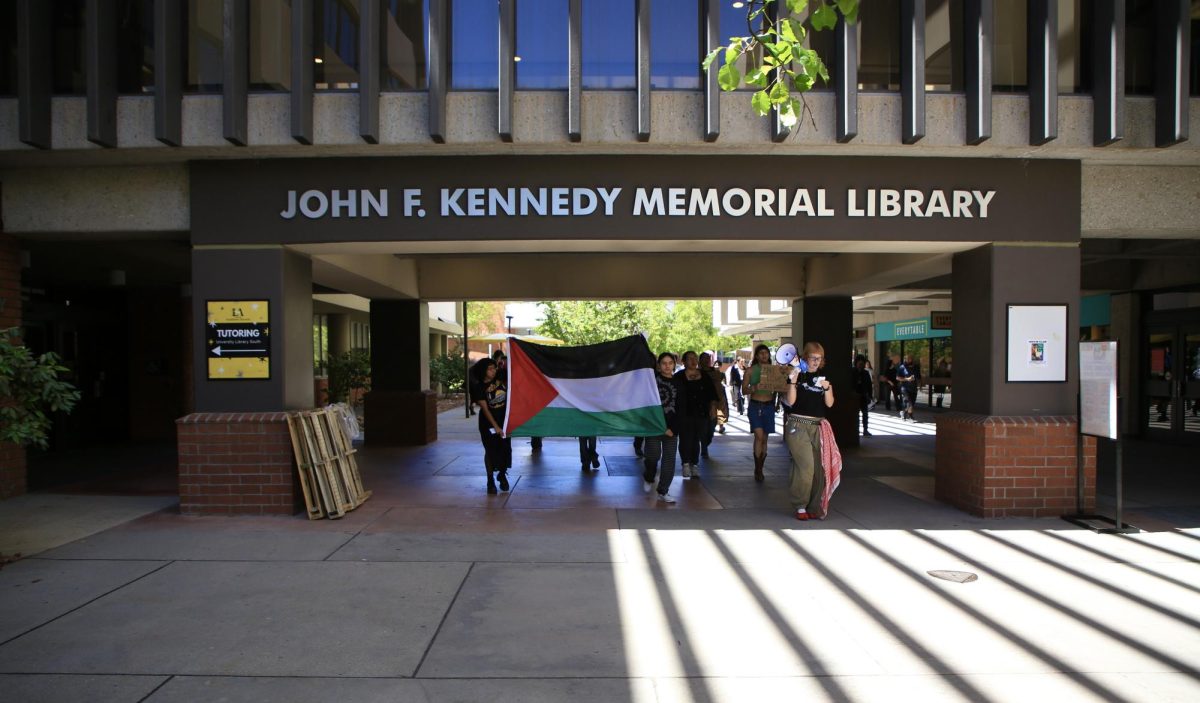
As a part of this on-campus anti-AI movement, a protest was held towards the end of April at 11 CSU campuses, including at Cal State LA. Several student and faculty organizations, including Students for a Quality Education (SQE), Popular University, the Black Student Union, California Faculty Association (CFA) and others gathered to denounce the system’s ties to perpetrators of war along with its investments in AI.
“I stand with you today to make the plea to the university to stop pouring money into Open AI to divest from CSU Open AI contracts,” Black Student Union President, Brenda Drew said at the protest. While Drew confirmed their title to the UT, it could not be independently verified. “Put that money where it can do good to the students, to the community.”