

Editorial note: This story was written and produced for the Investigative Journalism class during the spring 2026 semester.
A crack in the ceiling, a complaint of bedbugs, fleas, a lightbulb that has gone out, a leaky faucet, constant dorm power outages, the presence of mold and many more issues have all impacted hundreds of students in Cal State LA housing, as work orders for maintenance by those residents have gone unanswered for months, or even in some cases for several consecutive semesters. This is according to student testimony to the University Times (UT), the 2025 housing audit and analysis of maintenance records over the last academic year.
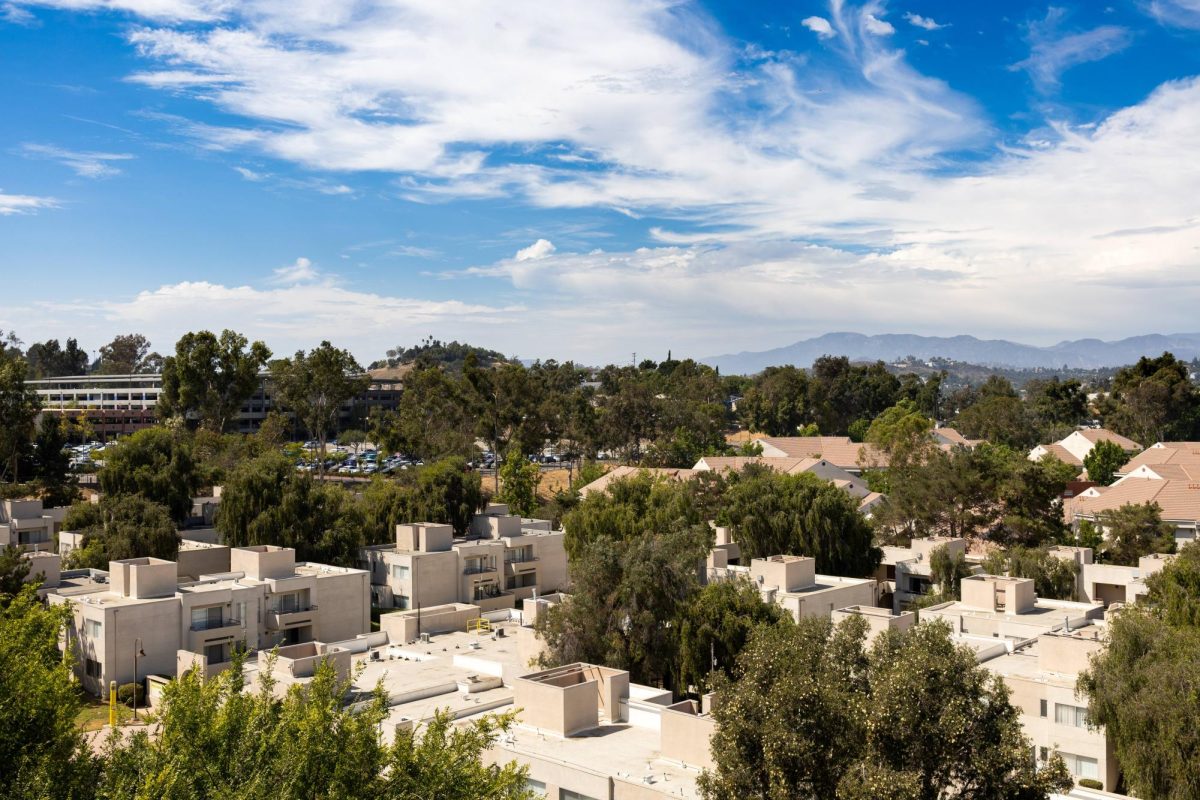
Across student housing at Cal State LA, there are approximately 2,600 beds across three towers in the South Village, the Golden Eagle Apartments (GEA) and the University Apartments. (The University Apartments are also often referred to as Phase I and II.)
It is not entirely clear how many students are facing work order delays and ongoing maintenance concerns, because some have pointed out that the number of complaints received by the UT may’ve significantly undercounted the true level of disrepair that each dorm may be facing.
Housing and Residential Life (HRL) at Cal State LA is an independent entity from the CSU and Cal State LA and what is known as a “self-supporting” organization. However, they still directly report to Cal State LA through the Division of Student Affairs and Enrollment Management, according to the Director of HRL, Luis Roldan.
Roldan began as the director of HRL in September 2025. Roldan is one of several new directors in the last several years, according to the audit.
At Cal State LA housing is funded through rent from students, meal plan charges and several other sources, according to the proposed budget for fiscal year 2024-2025. This is the most recent financial document available for housing on Cal State LA’s Financial Transparency website.
On the Cal State LA Housing Frequently Asked Questions page, it explains that students should be maintaining a clean environment in their dorms, and are also responsible for filing work orders when repairs are needed, and notes that “an individual work order should be filled out for each type of request.”
Students are also asked to fill out an Apartment Condition Report (ACR), or a Room Condition Report (RCR) (depending on the type of unit) at the beginning of their stays, and are asked to file needed work orders if maintenance is needed. A public records request was filed for the ACR and RCR, but it was not received, and the UT was not given an explanation as to why the reports could not be disclosed.
In addition to the noted reports that students must file when they check in, residents are responsible for any damages that are caused, including incidents of destruction that are “unintentional.”
Further, inspections are conducted by HRL to “assist in the assessment of potential damages.” However, the FAQ does not clarify whether or not these “inspections” are randomized or focused on apartments and rooms that have known issues.
Only four facilities workers are independently hired by Housing and Residence Life to handle all maintenance in the dorms, according to their website and others who corroborated what was posted on HRL’s website. These workers have assigned “areas” that they stick to, unless others need help with a maintenance order, or they’re bogged down by a larger-than-anticipated project or other urgent incidents come in.
As a part of this story and the investigation, the UT spoke to Fausto Esquivel, who has worked as a housing maintenance worker for the last 14 years. In total, Esquivel has been at Cal State LA for around 25 years.
In the past, without divulging into exact years, Esquivel said that there were formerly six maintenance workers across housing, however at the time when that was the case, Cal State LA only had the University Apartments in operation. But, as time went on Esquivel said that through “attrition” worker numbers dwindled and were never replaced, even as the South Village opened and purchased the GEA which created larger workloads for the maintenance crew in housing.
At one point, Esquivel had said it got down to only three people, including him, handling the maintenance of dorms for up to 2,000 students. One was hired in fall 2025 to bring the total back up to four.
“We’re a very dedicated group,” Esquivel said. “I have great admiration for all the other crew members. I know we do our best to make sure that they [students] have a great experience here.”
Last year, HRL was the subject of an audit by the CSU auditors which found several issues with how the department was run, how maintenance was logged, guest access and other highlighted issues. However, in the report released in July 2025, it glossed over the overall conditions of dorms on-campus as a major issue or safety hazard.
“We are actively working to implement audit recommendations,” Roldan said. “This will be a multi-year process.”
This is in direct contradiction to how students portrayed their experiences in campus housing to the UT, many of them having faced ongoing and repetitive safety threats and challenges to their school and work lives. Many of these issues that students brought up were done through an online submission form and corroborated by public records requests, images and lining up data with direct student experiences.
None of the students who initially responded to the Google Form responded to individual interview requests in time for publication, despite multiple attempts by the UT over the last several months. While they were quoted and their experiences were matched with available records, the UT decided not to use their names in the story for their protection and to avoid any unwanted repercussions in the future.
Separately, one student independently came to the UT and said they had a “news tip” about dangerous conditions in their dorm and provided email communications with HRL and the school that documented their claims.
The student who provided the tip asked to remain anonymous, citing concerns for repercussions, said that they are in the process of getting a “full-refund” saying that mold issues pointed out in August of last year were in violation of multiple California housing condition codes.
Initially the mold was not considered as the issue, but was instead attributed to “calcium buildup and rust” and instead of testing that didn’t come for several months the spots of mold were wiped clean and painted over.
Several subsequent requests that were verified through the public records request and what was provided by the student confirmed that active mold growth had been present for months before the outside contractor that did the testing was brought in by Cal State LA housing.
However, according to documentation provided by the resident, an independent lab that did testing in April found that the shower and bathroom area of the dorm had “condition three mold buildup.” Condition three is categorized by active mold growth and propagation deep into the walls and building materials, according to the documentation from the testing firm.
Immediately following these findings by the independent study, the students were relocated to a new dorm.
HRL spent “approximately” $5 million in fiscal year 2024-2025 on “facilities-related operations.” This figure includes routine work, “custodial support, repairs, equipment, contracted services, and utilities,” Roldan said in an email. However, costs “vary each year depending on occupancy, utility rates, emergency repairs, contractor work, and planned projects,” Roldan added.
In the 2024-2025 fiscal year, HRL was projected to have over $2.8 million in losses, according to financial records. In that same document, there was no breakdown on how much was set to be spent on maintenance or general facilities upkeep. It did say that $30,000 was set aside for travel expenses.
“I arrived in September of 2025, so I have limited insight into budgeting prior to my arrival,” Roldan said. “However, prior to the university implementing travel restrictions, HRL staff had the same professional development travel opportunities as other staff. In alignment with the university directive, HRL has also limited travel since my arrival.”
The audit said that HRL was struggling to maintain continuity of service, as it struggled with its own deficit–independent of the CSU-wide maintenance budget and deficit—which was estimated to be $387,567 on September 30 of last year. There have been no further updates to the total debt of HRL and the complete depletion of all reserve funding.
The audit also said that on top of $3.5 million losses it was expected to incur in the 2024-2025 fiscal year, it had an overall operating deficit of over $5.6 million from 2021-2023.
Many of these budgetary issues were attributed to challenged operations during the pandemic, lower than normal occupancy rates, aging infrastructure that led to “unanticipated emergency repairs and planned maintenance projects” and low enrollment numbers at Cal State LA.
In fall 2025, the dorms had an occupancy rate of 63%, which accounts for 1350 occupied units out of the 2130 that are available to be rented out. Currently 302 of the unoccupied units are being refurbished, according to Roldan.
This is a necessary process as buildings and units age,” Roldan said. “We are establishing best practices to ensure all units are in good condition going forward.”
This is far lower than the 90% occupancy goal listed in the audit.
To combat these issues, HRL said in the audit that it was “implementing short-term strategies to boost occupancy rates, student engagement, and facility upgrades, along with long-term strategies to renovate its older facilities and improve affordability. The plan includes partnerships with local community colleges, expanded use of summer conference programs, facility renovations, and a requirement for first-year students to live in university housing.” The requirement for first-year students began in fall 2025.
The occupancy rate for fall 2024 was 69%.
While some buildings existed at Cal State LA before it was officially founded as a college in 1947, the first construction after the school was opened at the current location was in 1956. The most recently completed construction at Cal State LA was the South Village Residence Hall in 2021.
Both the GEA, which was constructed in 1963, and the University apartments, which were built in 1984 and 1985, likely contain asbestos, according to an annual Cal State LA report titled the Listing of Suspect Asbestos Containing Construction Materials. The areas with potential asbestos include flooring tiles, pipe insulation, floor mastic, roof mastic and drywall joint compounds. Asbestos was phased out of construction in the late 1980s. Floor mastic is used to secure tiles and vinyl floor panels to the ground.
Further delays to maintenance and work orders to the older dorms, where a significant portion of the mold issues were reported, present ongoing challenges to student safety and well-being.
In one case, according to maintenance logs, a room in the University Apartments had a severe mold issue on the ceiling of the shower stall, and the shower was “leaking into the hall area” near the dorm. The area was sealed off from student access, and the remediation of the shower was outsourced to Belfor, an LA-based remediation firm. This was one of a few requests that were still marked as “in progress” when the UT received the public records request in late January, a month after the maintenance request was initially filed.
In another instance of a severely delayed work order, a student logged a “broken window” complaint on Dec. 30 last year, but it wasn’t until Feb. 12 of this year that a purchase order was approved for the repair to get it fixed with a local window contractor. The parts were still outstanding and the work hadn’t been completed when the UT received the maintenance records on March 7 of this year.
Some of those additional unanticipated repairs included “water system and fan coil breaks” in the South Village. The costs associated with the fan coil replacement noted in the audit amounted to $44,000, and were paid out in April 2025, according to a contract in the public records request.
However, there were additional fan coil replacements in the South Village in October 2025 that cost the CSU system $194,225, according to another contract released in the same public records request.
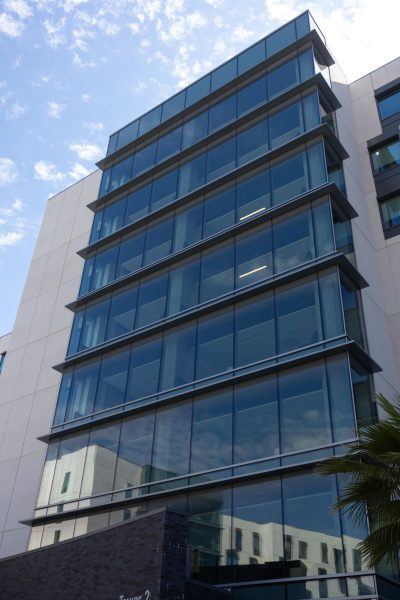
Since South Village opened in 2021 it has been consistently met with maintenance issues and is part of a growing network of CSU buildings that are considered relatively new, but are quickly falling behind on regular upkeep as HRL continues to struggle with balancing its budget.
“Newer doesn’t mean maintenance free. Residence halls experience a level of daily use that is very different from most campus buildings because students live in these spaces around the clock. They sleep, study, shower, cook, gather, and build community here every day,” Roldan said. “We fully recognize that residents have raised concerns, and we want them to know that we take those concerns seriously. At the same time, maintenance needs should be understood in context, including the size of the building, the number of residents served, the type of issues reported, and how those issues were resolved.”
In the work orders public records request, students repeatedly pointed out “power outages” and failed “outlets.” These issues were often corrected after a breaker was reset, according to the logged maintenance service notes, but in some cases, the maintenance note said that “power was restored” without detailing what exactly had been done to correct the problem. Over the course of the last year, according to the same records, power restoration requests were made at least 120 times across the three South Village towers.
The same requests were occasionally made at the other living areas, but with less frequency.
Esquivel pointed to the fact that the number of breaker reset requests in the South Village can be directly tied to the safety systems that are in place to manage the grid in the towers, and is designed to trip at 20 Amps.
“If there’s three residents and each has their computers going, a refrigerator and then possibly a coffee maker that could set off the circuit,” Esquivel said.
While financial documents were received, it was nearly 800 pages of signed contracts with outside contracting firms, water bills, waste processing, gas bills and sporadic emails from workers and administrators in housing. These requests did not yield any results for granular financial data for HRL beyond what was provided by the documentation on the Cal State LA Financial Transparency website.
On the Cal State LA Facilities website and HRL page, they lay out timeframes and response times for different work orders that are requested by students, Residential Assistants, or workers in the dining hall.
Most requests by those in housing fall into the “urgent” category, which are “investigated and assessed” within 72 hours. Issues that will be addressed within 72 hours include “clogged drains, malfunctioning doors” and leaking caused by faucets. However, if it is an emergency, which includes things like “water main breaks, reports of smoke, elevator shutdowns, or a loss of power, the response is “immediate,” according to the Cal State LA facilities and HRL websites.
Scheduled maintenance will typically be done within 30 days of the request. But, deferred maintenance will be purposefully delayed and include projects that require additional planning and funding, the same webpage said.
The mold issues and generally delayed and ignored repairs by HRL officials extended beyond dorms and into communal spaces that are open to all residents.
One of these extended issues included in the work orders public records request and backed up by student complaints was an elevator in the South Village that has allegedly been out of service since the first week of the fall 2025 semester, according to multiple submissions to the UT Google Form. The exact timeline of the outage was unable to be confirmed.
In the work order public records request, the elevator work order did not have a visible submission date. It said that an elevator in Tower Three in the South Village was “out of service.” It is unclear who submitted the alert. In further notes by a team at HRL it said that the cause of the outage was a broken belt, and noted an ongoing “contractual conflict to repair this.” And that “housing is in conversations with another company to change to a maintenance and repair contract.”
The elevator remains out of service as of publication, but Roldan attributed the significant delay to the “experience of extended elevator down time under our previous provider.”
However, one elevator in Tower Three is still operating, according to the maintenance documents.
Maintenance workers in housing use a program called StarRez to track and log work orders. Outside contractors do not have access to the program. The audit highlighted several shortfalls in the program and how it was used. Much of the time, in the records request both completion dates and the work order being “marked” complete were missing from the data, leaving open-ended questions and confusion in logged data.
In one student report to the UT through a Google Form, and backed up with data from the public records request alerted the housing facilities department of “possible mold on shower ceiling” and “exceptionally” dirty carpets in their dorm in early December.
The issues were marked as “complete” in the public records request but the student said in their late January form submission that their issues had not been fixed at all long after it had been marked complete by HRL.
HRL said the issues within StarRez would be corrected by January of this year, but even after that point many rows had missing ending times and missing “completion” designations. In July 2024, HRL did a mass closure of over 12,000 pending work orders that were attributed to maintenance issues addressed by outside agencies that do not have access to StarRez and were not previously closed, the audit found.
For the most part, the public records requests show that most complaints by students in each of the buildings were fixed within a few days. There were exceptions for longer-term projects and work orders that needed extended work from outside contractors.
In the period from January 2025 through January of this year, there were over 2,799 verified requests for maintenance made by students in housing, several of which directly aligned with what was said by students who submitted their issues to the UT Google Form. While almost entirely unverified, there were at least 62 independent reports of mold in the dorms in the last year.
However, some of these were clearly marked as duplicate requests or students submitting a request for the same issue if it hadn’t been adequately addressed the first time around.
In other cases, the public records request said there were several instances of students being permanently or temporarily moved to other vacant dorms while serious maintenance issues were dealt with in their original dorms.
In those same reports, the work orders were marked as “complete” even if it just meant the student or students were rehoused to a new dorm, and does not mean those fixes were actually completed.
“There could be instances where the student relocated and we responded to the address where they were and not the address where the issue was,” Esquivel said. “So when we showed up the issue didn’t exist at that specific unit. Though we were responding to the correct person, the person’s information reflected a different unit.”
Much like Esquivel said, HRL aims to continue supporting students as they stay at campus housing, despite the issues that may arise.
“Our staff work every day to provide students with a clean, safe, supportive, and community-centered living environment where students can build connections and feel a sense of belonging,” Roldan said. “We recognize that students have raised real maintenance concerns, and we take those seriously.”
The UT is continuing to look into this issue of maintenance backlogs and work orders in housing. If you’ve experienced any of these issues, the reporter on the story can be reached at [email protected]