

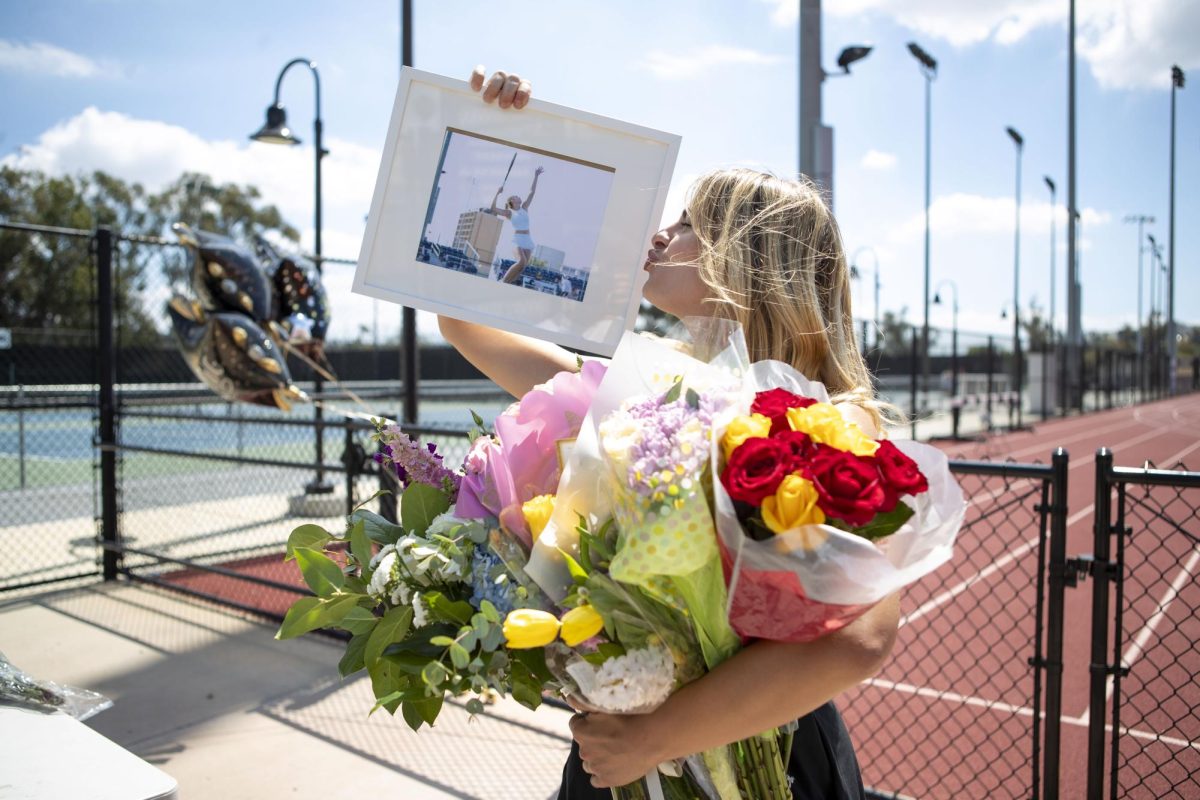
Maldini Simic is no stranger to tennis. Growing up in Manchester, England, she was a multi-sport athlete competing in field hockey, badminton, swimming, and track. She had the prestigious opportunity to represent England nationally in netball and rounders. Out of all the sports she played, one sport stood out above the rest.
“I think I chose tennis because it was the sport I was strongest at, and the one I loved the most,” Simic said.
That love turned into discipline. And that discipline turned into excellence. Tennis demands something different, something internal: mental fortitude. Simic believes that’s what separates it.
“Sixty percent of tennis is mental, forty percent is ability,” Simic said. “It’s you versus your opponent. You’re out there alone.”
Competing around the world while others lived typical school lives forced her to grow up early. That reality shaped a persistent mindset not just on the court, but in life as well. “You learn how to cope on your own. It makes you stronger, not just in sport, but in life.”
Simic’s journey from England eventually brought her to California, where she began her collegiate career at Hope International University before transferring to Cal State LA her junior year in hopes of a bigger challenge. She felt too comfortable and wanted more. After competing against Cal State LA, Simic introduced herself to head coach Richard Gallien. Their connection quickly developed, and after watching her compete again, Gallien made a call that changed everything for Maldini.
“I was at the driving range when he offered me a spot,” Simic said. “I was overwhelmed with happiness. I knew it was a new chapter.”

Beyond tennis, Cal State LA offered something more meaningful: greatness, inspired by tennis icon Billie Jean King. Simic, a political science major, says King’s influence extends beyond the court into women’s history and activism.
“I’m a feminist until the day I die,” Simic said. That influence also showed up in the way Simic approached the game mentally.
For Gallien, one trait connects Simic to the legacy of players like King: intensity. Gallien saw both raw talent and character in Simic early on. Georgina Parr, a teammate of Simic, highlighted her hard work and ability to stay grounded.
“I knew she was an excellent player because I’d seen her results,” Gallien said. “But what struck me most was her personality, she had a great smile and was someone I knew I could work with.”
Throughout decades of coaching, Gallien has emphasized lessons that extend far beyond tennis and reflect on something taught to not just Simic, but previous student athletes.
“Tennis is a very difficult sport,” Gallien said. “But the mental tools you develop, perseverance, emotional maturity and those things last a long time. She’s one of the hardest workers I know, but also reminds us not to take anything so serious, after all, it is just a tennis match.”
As Simic prepares to graduate this year, those lessons remain at the forefront. Gallien emphasized that handling disappointment with a positive attitude increases an athlete’s chances of success. Those lessons taught to Simic will guide her as she decides what’s next. As her chapter comes to a close, her career is worthy of one last final bow.