

When Patrick Macmanus was approached to write a television drama about serial killer John Wayne Gacy, he turned it down. He was approached a second time, and again, he turned it down. When he finally agreed to create Peacock’s “Devil in Disguise: John Wayne Gacy,” he was still not at all interested in telling Gacy’s story. Instead, he took the opportunity to put a spotlight on the young people whose lives Gacy destroyed, and how the system that was meant to protect them ultimately failed.
The same emphasis on youth was clear as day on Nov. 19, as the Cal State LA Criminal Justice Student Association (CJSA) hosted a screening of “Devil in Disguise: John Wayne Gacy,” and a Q&A with Macmanus.
Students gradually filled Los Angeles Room B of the University Student Union Building as members of the CJSA greeted them with a table covered in T-shirts for sale, free candy, and a sign-in sheet for students seeking an extra credit opportunity.
“A lot of people, they join criminal justice and they think it’s true crime and stuff, but then you get into it and you’re like, no, this is about criminal justice reform, police reform, and all of these things,” said CJSA Vice President Cydia Barrientos.
Nayla Cardoso has led the CJSA as president this past year, organizing events with various industry professionals, such as a trip to the Clara Shortridge Foltz Criminal Justice Center, where they witnessed a courtroom in session.
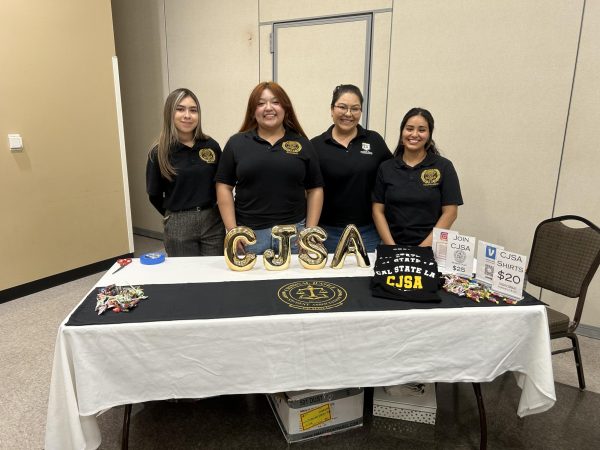
“I think as our CJSA board, we definitely have tried to get the attention of every type of student here at Cal State LA,” Cardoso said. “So I think that as long as we attract someone and they’re interested in one thing in our club, no matter the major, I think we’ve done our jobs.”
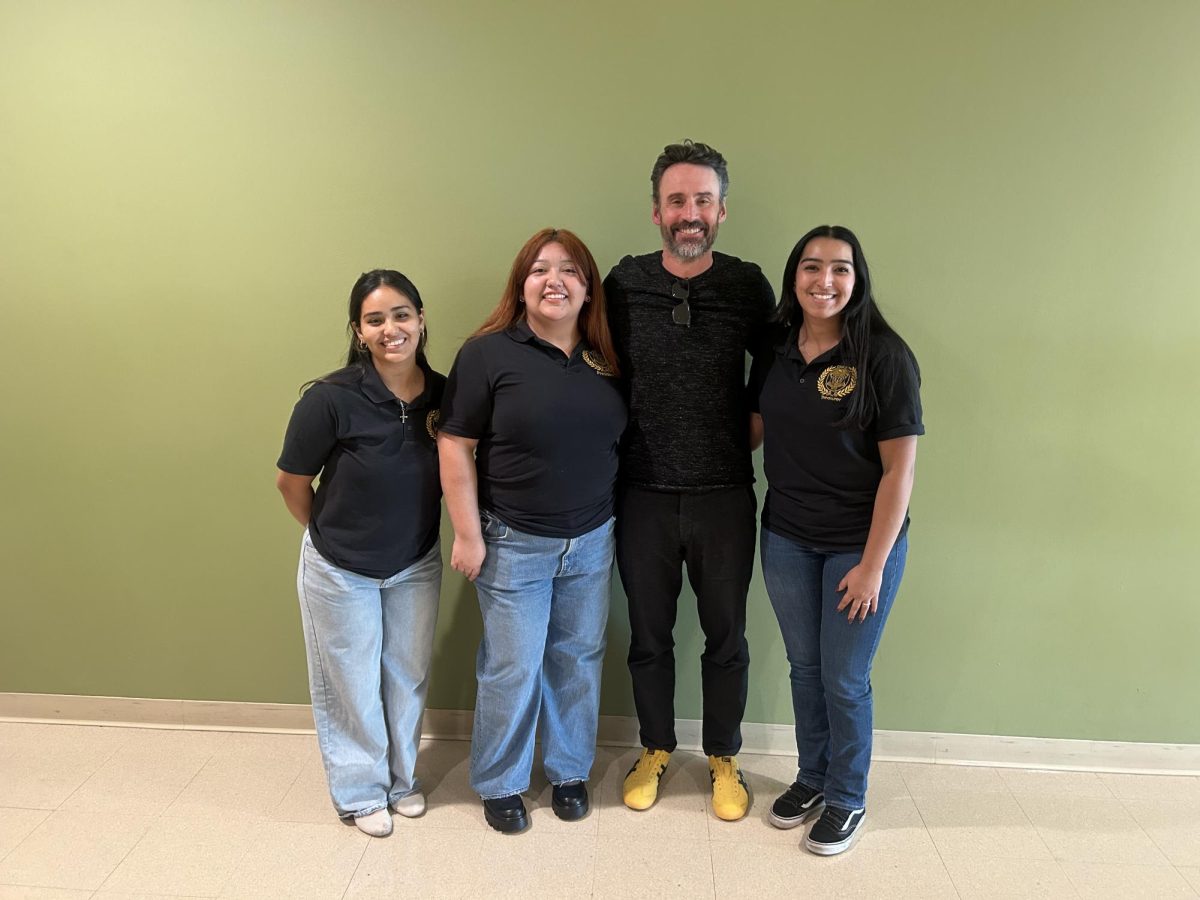
Macmanus arrived with people from NBC and his own company, Littleton Road Productions, including Ioli Filmeridis, advisor on Littleton Road’s philanthropic initiatives. They also happen to be married.
Macmanus took a few minutes to address the crowd of students waiting for the episode to start by opening a dialogue. He went back and forth with one student and asked about their plans after graduating, to which they responded about their intention to obtain their Master’s degree.
Macmanus also clarified that they would be showing the second episode instead of the first. After a short delay due to technical difficulties, the show began, as the lights darkened and the room went silent for the next hour.
Before the episode officially started, a title card for Regarding Youth came onscreen. Regarding Youth is a social action campaign created by Littleton Road Philanthropy, an expansion of Littleton Road Productions. Macmanus started the production company with his sister, Kelly Funke.
“The very first rule that we talked about in the writer’s room was we will never show a murder,” Macmanus said in an interview with the University Times. He explained that one reason writers tend to tell these stories with more gratuitous violence is that audiences simply respond well to that kind of content.
In the Q&A that followed, Macmanus explained the reason they wanted to show the second episode was that it best exemplified the series’ goal in prioritizing the stories of the people affected most by Gacy’s actions.
“Because the show focuses on the victims and the plight of the victims, the systemic failures and prejudices that led to their ultimate demise and allowed the violence to continue, we created an accompanying campaign to help audiences move from like anger and frustration and fear into awareness and action,” Filmeridis said in an interview with the University Times.
The Q&A lasted a little over 20 minutes, during which Macmanus and Filmeridis spoke further about Regarding Youth and the significance of promoting improved care and higher standards of living for young people.
They spoke about how necessary it was to tell the story of Gacy’s victims as respectfully as possible.
“We worked with GLAAD, which also advised on the scripts to explore LGBTQ issues, Covenant House to look at the issues with foster youth and homeless youth and runaway youth, the National Sexual Violence Resource Center, which is based in Pennsylvania but works nationally on dealing with trauma from sexual violence,” Filmeridis said.
When the Q&A wrapped up, Macmanus stayed behind to continue speaking with students for a little while longer.
Macmanus spoke about the balance between creating a show that is both respectful to the real people affected in this story and entertaining to audiences.
“I would love for everyone to want to watch, but we also knew that we were trying something different,” Macmanus said in an interview with the University Times. “And so what we were hoping to do by this was to begin the conversation that you could do true crime differently and that it could have an effect on people.”
While the main goal in screening this show on college campuses may ultimately be promotion, Macmanus was clear in his takeaway from the experience.
“The last thing I’ll say is meeting all of these college, these young men and young women, these college students, gives me a little bit of hope that my kids might actually be smart someday,” Macmanus said.