

This is part three in a series of dispatches as News Editor Seamus Bozeman follows developments about the Teamsters Local 2010 strike at Cal State LA and across the CSU system this week. Read the second story here: Dispatch #2: A hit-and-run, irritated students, and continued allied union support, day two at the Cal State LA Teamsters Local 2010 Strike
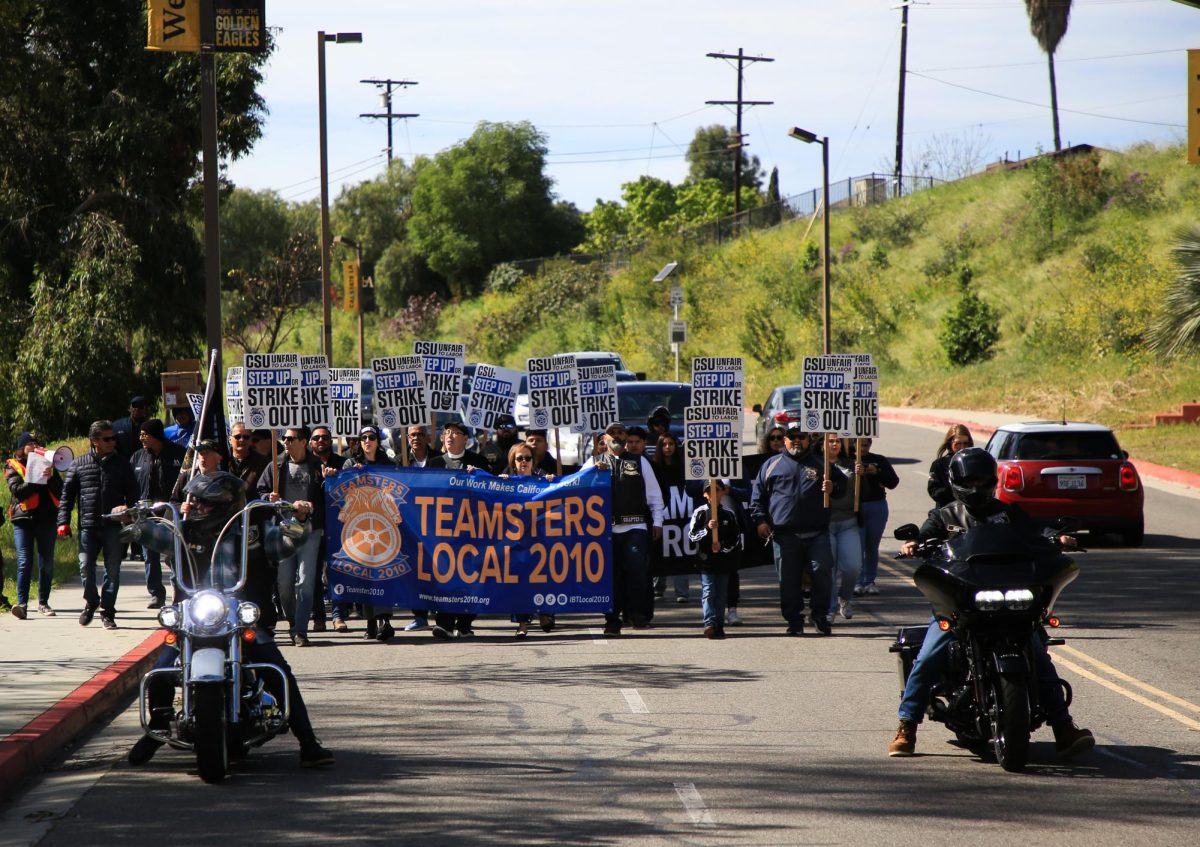
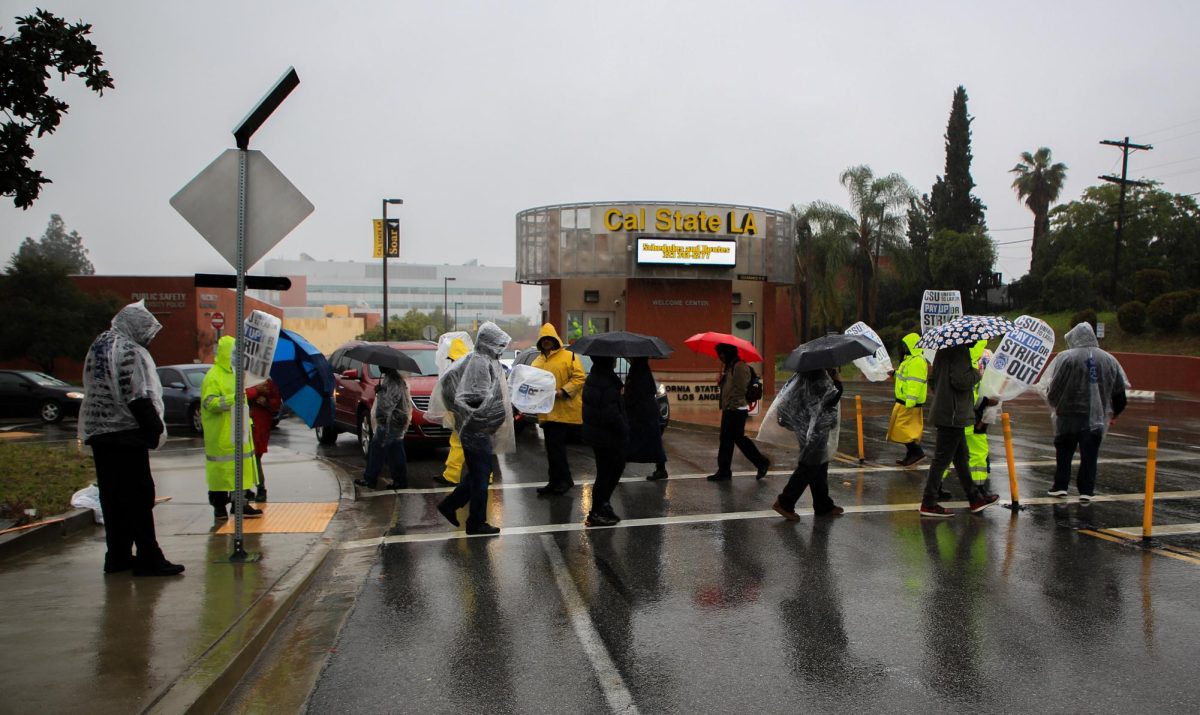
The Teamsters Local 2010 are on day three of a strike at Cal State LA and across the CSU, fighting for pay raises the union says they were owed by the university system in July of last year. At Cal State LA, the rain poured down but didn’t dampen spirits; a teach-in on the picket lines and frustrated motorists were the defining moments of day three.
Despite the return of the drenching rains for the majority of the day, the vibes remained high on the picket line, and there was hope that their demands for a fair contract and their promised raises would be met.
“We’re hanging in there, the rain is cold but we still feel that it’s necessary to be out here and stand together and fight together,” Dennis Sotomayor, the chief steward of Teamsters Local 2010 at Cal State LA said.
Efforts to turn truckers and other non-faculty workers around continued to be successful. At least one vehicle, from AT&T, was turned while the UT was out on the line with the Teamsters this morning.
Chants from the Teamsters continued as honks, raised fists, and other shows of support continued as vehicles passed the line and entered campus. Again, two to three at a time, before the Teamsters blocked the road and continued their rounds of picketing.
Only two entrances were picketed today, after Sotomayor said the group was smaller than the previous days, but did not provide an exact number. On day two, three entrances were blocked.
However, frustrated and annoyed motorists continued to be present and yell their own grievances from their cars. The picketers countered with noise makers, handheld bells and chants about how the CSU is not honoring their contract, and how the school system is incredibly greedy.
The picket line at the Welcome Center became a classroom for the early afternoon as one class, despite the blustery downpour, came out and learned why the Teamsters were on strike, the power of solidarity and participated in the picket. One picketer said “teach-ins” couldn’t get any more serious or legitimate than today.
Sotomayor was proud to see the younger generation on the picket line and getting educated about union power, workers’ rights and standing besides each other during fights for the working class.
“It’s absolutely necessary that we’re building the foundation for the next generation, whether it’s in the workplace or in the social place in our community, standing up for one another and being strong,” Sotomayor said. “Showing what a few people can do together to make a difference.”
For Melina Abdullah, a professor in the Pan African Studies Department at Cal State LA, teaching her Race, Activism and Emotion class on the line was important to give her students first-hand perspective of worker power in action.
“So, this is activism,” Abdullah said. “We’re teaching a lesson on solidarity that workers are strong and stand together. This is what solidarity is, and we’re teaching about the power of unions.”
Abdullah said that “we’ve been duped into believing that we don’t have any power,” but the truth is, she says, “we do have power.”
Those on the picket lines have been fed lunches with funds provided by the Teamsters, from Jersey Mike’s Subs on day one, a pizza place on day two, and on day three there were burritos and tacos, which were offered to everyone on the picket line.
Over the course of the four-day strike, Teamsters Local 2010 members who are on the line for full days are eligible for $600 of strike pay, an 18% pay cut for Sotomayor. It is not clear if this would be the same percentage for others on the line.
However, those who stayed home and didn’t cross the line did not receive any pay, and took the pay “dock” according to Sotomayor.
“We’re taking the hit because we feel strongly about what we’re doing out here,” Sotomayor said.
For the Teamsters Local 2010 and their brothers and sisters across the CSU system, the strike was intended to last only four days and not be open-ended, which can last indefinitely.
As the smallest bargaining unit in the whole CSU system with just 1,100 members, they are the minority union, but overall across both public university systems in California, the Teamsters represent over 20,000 workers, according to Sotomayor.
“It is an endeavor to shut down 22 campuses statewide with 1,100 skilled trades workers,” Dennis Sotomayor, the chief steward of Teamsters Local 2010 at Cal State LA said on day two.
The strike that the Teamsters did in 2023 only lasted a few days, after the CSU agreed to their demands, but now three days in, the union continues to trudge on calling for their pay raises to be fulfilled across the CSU system and at Cal State LA.
The CSU said in a statement on the first day of the strike, as reported on day two, calling for the Teamsters Local 2010 to come to the bargaining table. However, Sotomayor said that he expects it to last until the final day, especially considering the CSU’s statement claiming the Teamsters Local 2010 are causing the delays back into negotiations.
“They’re [The CSU] is pretty much saying that we’re the ones who are doing it,” Sotomayor said. “And there’s been no change in that position.”
Operations on campus continue to move smoothly, even as the strike entered its third day, according to Cal State LA Spokesperson Erik Hollins.
There have been no harassment complaints or Time Place and Manner (TPM) violations from the picket lines, Hollins said.
The TPM policies were implemented following the Pro-Palestine encampments in spring 2024, and placed limits on where protests can be, their level of disruption and certain noise level restrictions.
Additionally, there have been no known citations or warnings being issued to the striking workers for causing traffic blockages and holding up traffic, according to Hollins.
“Traffic and road safety citations are a local law enforcement matter,” Hollins said. “Local authorities are aware of the situation and traffic impacts.”