


Correction: An earlier version of the story incorrectly noted that “none” of the unions had seen the EEOC subpoena, it has been corrected to clarify that the statewide unions (CFA, CSUEU, and UAW 4123) were granted access to the Cal State LA EEOC subpoena in October of this year. We apologize for the error.
Editorial note: The University Times (UT) staff and editorial team are student workers and have also been impacted by the data breach to the federal government and this investigation. We will continue to cover this story with neutrality, fairness and without bias.
Earlier on in the fall semester, the U.S. Equal Employment Opportunity Commission (EEOC) was given all contact information of the faculty, staff and student employees at Cal State LA without their permission or a chance to deny the request. This came after a federal subpoena in September, amid an ongoing investi gation by the agency for allegations of antisemitism.
This is on top of controversy between on-campus worker groups, the CSU and Cal State LA as to whether or not the EEOC subpoena needed to be immediately complied with.
The members of the United Automobile, Aerospace and Agricultural Implement Workers of America, Local 4123 (UAW 4123) that spoke to the UT argued that the federal subpoena served to Cal State LA was not a court order, but simply an administrative request that didn’t require immediate compliance.
Cal State LA Spokesperson Erik Hollins pointed to a Q&A about the EEOC investigation, which said that the subpoena was seen as a direct order that needed “immediate compliance” with no delay.
A lawyer with the Student Press Law Center said that while he can’t say anything for sure without seeing the document, an EEOC subpoena is an “administrative subpoena.” It does not start out as a court order, but it’s much more than a voluntary request. It is instead a legally enforceable demand for information, which the agency can ask a federal court to enforce if the recipient refuses to comply.
As of publication, the UT had not obtained a copy of the September EEOC subpoena. However, on-campus unions at the CSU and their statewide leadership had been given access to the subpoena in October, according to Hollins. However, it is still unclear if any individual chapters had seen the documentation.
In an interview with the statewide president of the UAW 4123, Lark Winner, which represents over 10,000 academic student employees and other workers at the CSU, said that the current presidential administration is very explicit in its onslaught against “higher education, on workers’ rights, on immigrants, on LGBTQIA folks, on disabled folks in general,” with no effort to hide these attacks.
“It’s so dangerous to comply in advance with this administration [Trump],” Winner said, who is also a graduate student at California State University San Bernardino. “We know that it’s never just the first step. It’s always the first step to many steps. How much can they get away with?”
A student representing the Students for a Quality Education (SQE), at Cal State LA who wished to remain anonymous fearing retaliation because the club is not officially sanctioned at Cal State LA said that their biggest concern was the fact that so much of the campus and some of the student workers are undocumented, hispanic or latino and heavily targeted by the Trump administration and in ongoing ICE raids.
“We don’t believe this investigation is being done in an earnest attempt to crack down on any legitimate claims of anti-semitism, but rather things like political dissent,” the student from SQE said. “And people protesting against the actions of the Israeli government for what they have done in Palestine.”
SQE advocates for a free CSU system that is accessible and equitable for all students.
The allegations were incredibly vague, and hard to either respond to or address, according to Eric Phipps, a graduate student in the Philosophy Department, a member of UAW 4123 at Cal State LA and union advocate.
The request for contact information and student data at Cal State LA also included former faculty, staff and student workers that were employed with the university as early as October 2023. Many of those students have since graduated and were only employed for six months, a year, or 18 months in transitory roles as academic workers, Phipps said.
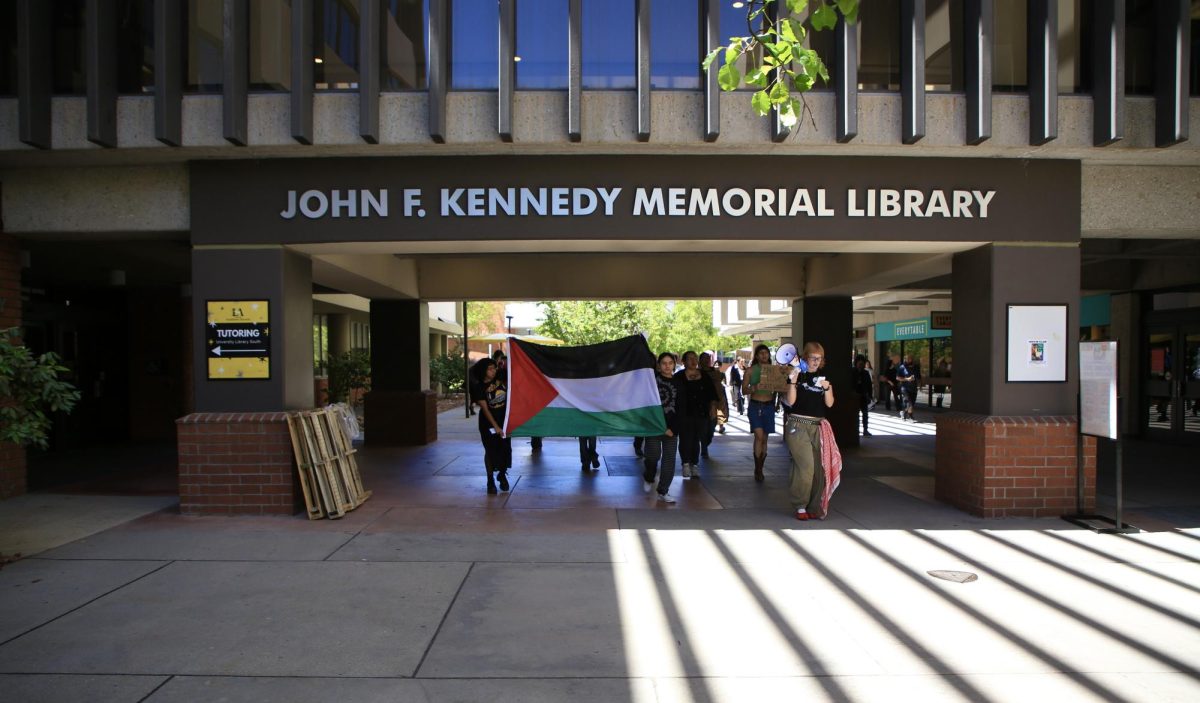
This comes after Cal State LA was the site of a weeks-long encampment and massive pro-Palestine protests in spring 2024, following the bombardment and continued genocide in Gaza by Israel since October 2023, according to earlier UT reporting.
UAW 4123 said they were proud participants in the pro-Palestine protests across the CSU and support for the wider protest movement last spring.
“I think as a union we’re very proud of that [their participation in the protests],” Winner said. “I think the necessity for there to be free speech on our campuses and the right to protest and the right to have our voices heard is already protected.”
The student from SQE was also a part of the protest movement and encampment and called the claims of antisemitism “disheartening” because there were no claims of or clearly antisemetic actions beyond “antizionism” and protesting the “genocide.” Antizionism, according to the student from SQE has commonly been falsely equated to antisemitism.
UAW argues that the EEOC investigation is part of a wider movement by the CSU to heavily restrict and “chill” free expression and speech on campuses. Winner said that it stems from the CSU brutalization of protesters during the encampments, to the implementation of the Time Place and Manner (TPM) policies that were enacted in the summer of 2024, following the encampments and protests.
The new TPM policies have limited free speech across the Chancellor’s Office in Long Beach, and on the 22 campuses to very specific areas and some actions are now illegal. The policies included expanded rules on specific protest locations, protest schedules, sound amplification limits, and wider restrictions about what students can bring to campus, according to Cal State LA’s TPM policy. The CSU said at the time that it was part of an effort to balance free speech protections, public safety and ensure that campus operations remain unimpeded.
Former graduate workers and other student workers had no idea that their contact information was in the hands of the federal government.
After the EEOC’s federal subpoena earlier this fall, Phipps said that one of their classes had moved online as a direct response to the order, adding that they could not “talk about our area of interest and the things we study in safety anymore.”
This action is in addition to classes that were allowed to move online due to the persistent threat of ICE raids this past summer and fall semester in the Los Angeles area and communities near Cal State LA.
The investigation was believed to have been spurred after three staff members reported instances of antisemitism at Cal State LA. The basis for those claims or an exact timeline could not be independently confirmed by the UT. The investigation of antisemitism also morphed to include the entire CSU system, as previously reported. However, no systemwide subpoena has been ordered by the EEOC so far.
But, the student from Cal State LA SQE said because the EEOC subpoena for faculty information aligned with the start of the latest bombardment of Palestine in October 2023, they feel that “it kind of signals to us that this is not about any real claims of antisemitism, but more so to crack down on support for Palestine.”
This is not the only investigation that is targeting the CSU system. The other investigation, headed by the Federal Education Department and their Office of Civil Rights, focuses on the PhD Project, an organization that the CSU stopped working with in 2024.
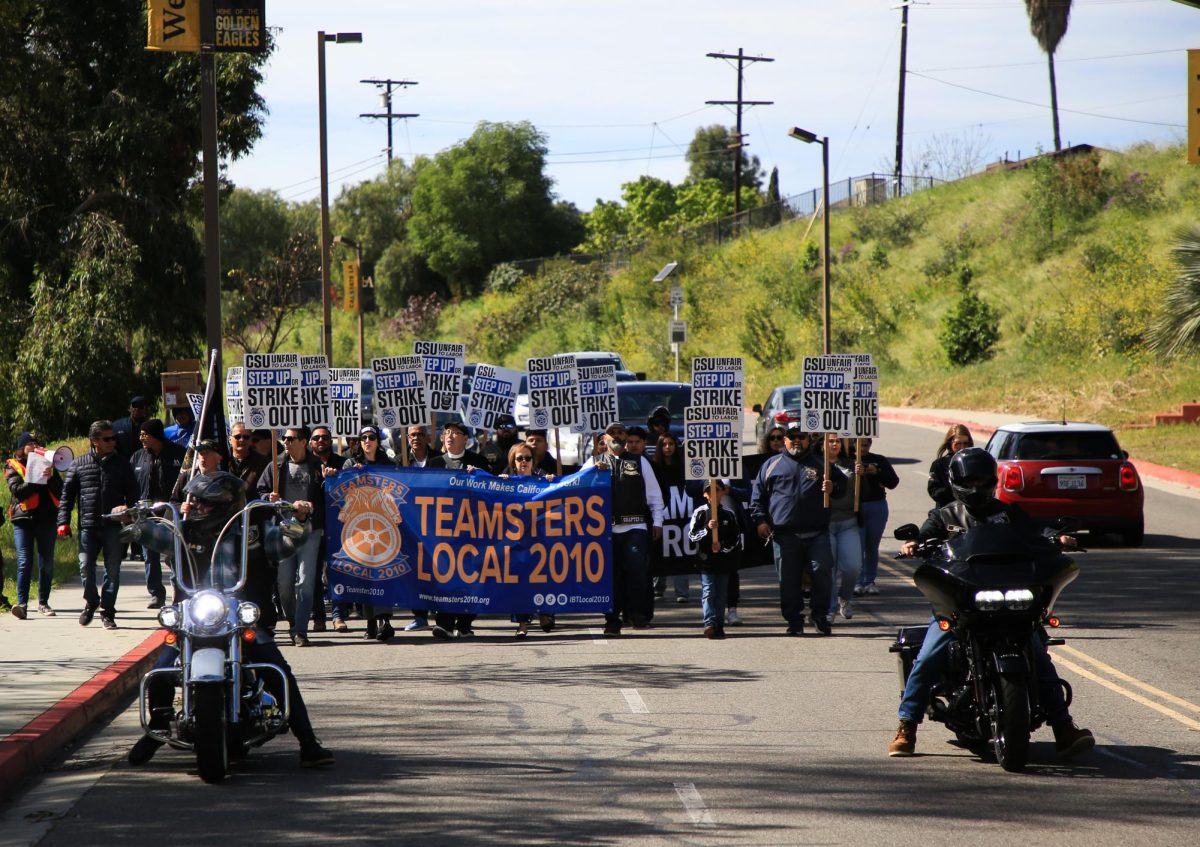
Currently the CFA is attempting to block additional compliance with the federal government after they filed a lawsuit against the CSU in October in state court, following the release of worker information at Cal State LA. The case is currently ongoing and there has been no injunction or ruling. The lawsuit also has the support of others including the UAW 4123 and the Teamsters 2010.
However, Winner said that it “would not be a surprise in the slightest” if an even wider systemwide subpoena request comes forward, given what has happened so far and the constant attacks upon higher ed institutions under this administration.
Winner said that the CSU has a deeply rooted issue with being transparent and effectively communicating the full picture with their correspondence with workers, especially with the CSU’s constant “Friday afternoon emails hoping that it would go under the radar” about the EEOC subpoena and information being shared.
Students had five days to reply after an email was shared on a Friday in mid-October to request that their information would be withheld from the EEOC subpoena.
No former Cal State LA students were notified of the opt-out program because, according to Phipps, their school emails were either inactive or former students no longer checked their old school emails.
“And to have the largest public four-year university system in the country comply in advance without any sort of pushback, or without any sort of prior notification, advance warning to the workers that this [the EEOC subpoena at Cal State LA] was coming is just completely unacceptable,” Winner said.
Winner is concerned that this is a first step to further “arm twisting” of these higher education institutions, to see how far this federal government can go before the CSU or other colleges and universities start to stand up to these continued orders.
Phipps added that they were the one that reached out to the former student workers to notify them that their information was at the time being shared with the federal government.
Hollins countered the claims of UAW 4123, saying that emails were sent in order to inform both former and current academic workers at the school about the EEOC subpoena and actions taken by Cal State LA.
“At a school that prides itself on inclusion and equity and our diverse student population, and then to turn around and actually be the cause of this intimidation of that very community, it’s remarkable,” Phipps said. “It’s not surprising, but it is completely inappropriate for the kind of campus that we actually want to create.”
Are you a student worker at Cal State LA and have something to say about this ongoing investigation, please feel free to reach out to us at [email protected]. We’d appreciate your perspective.