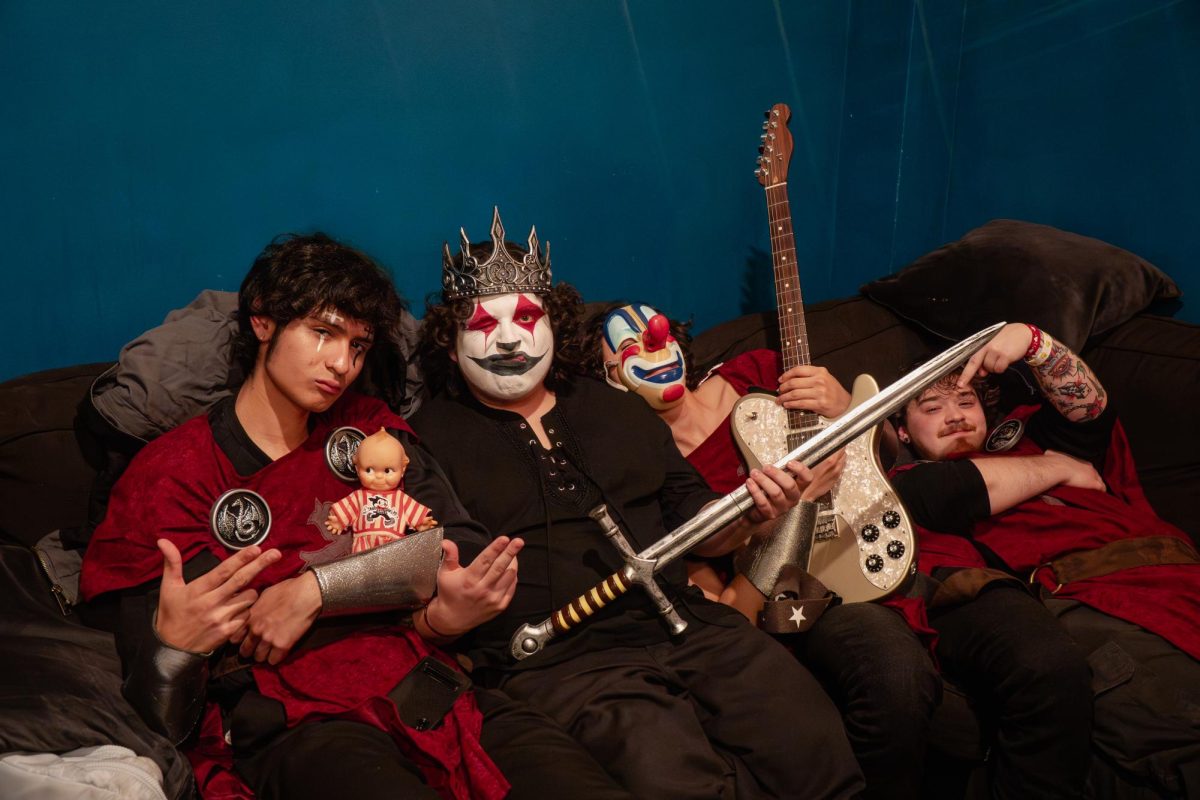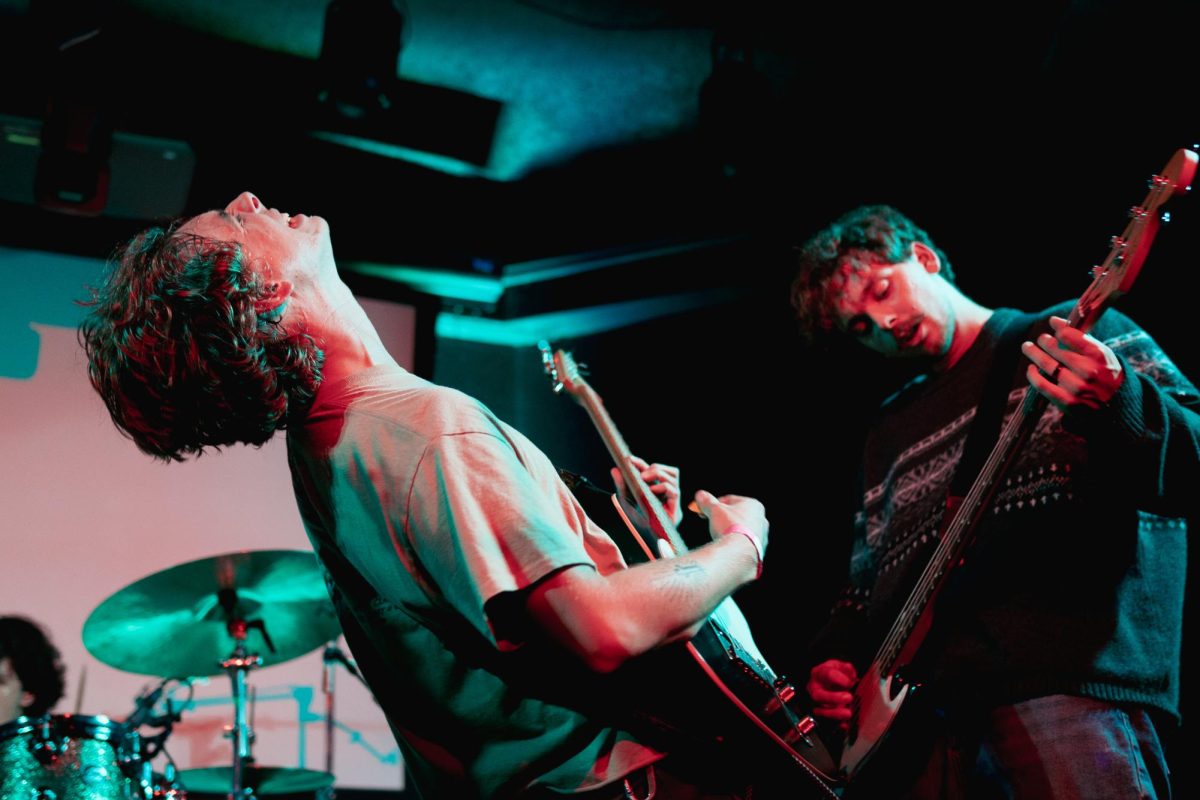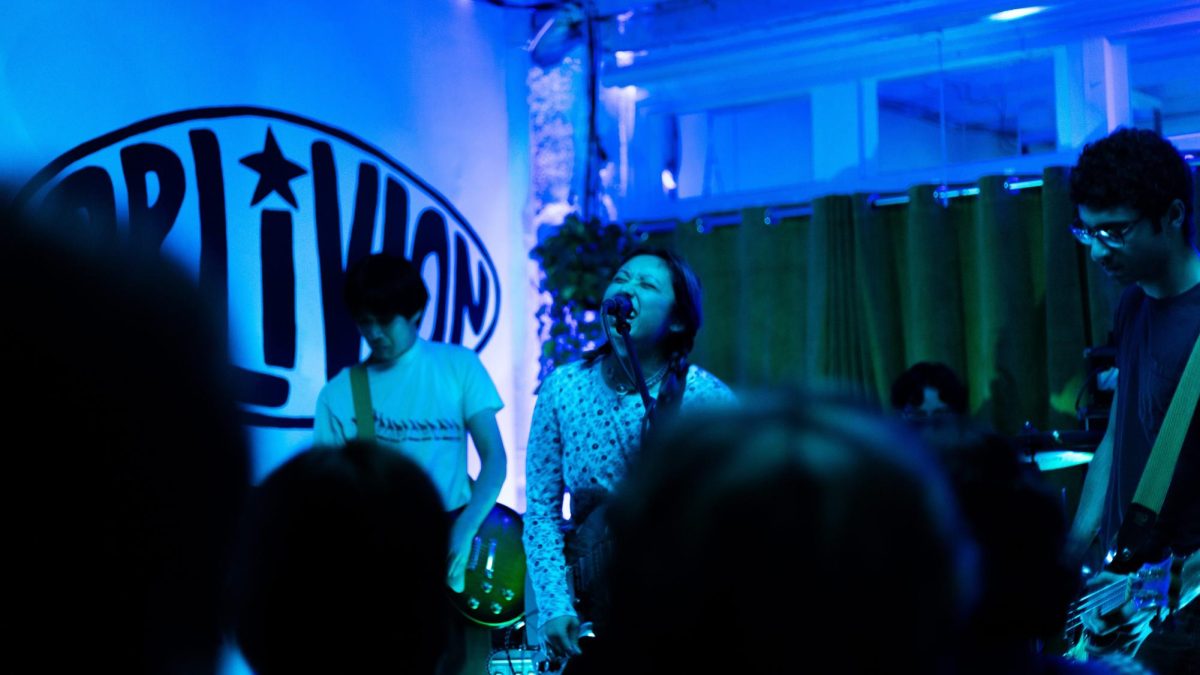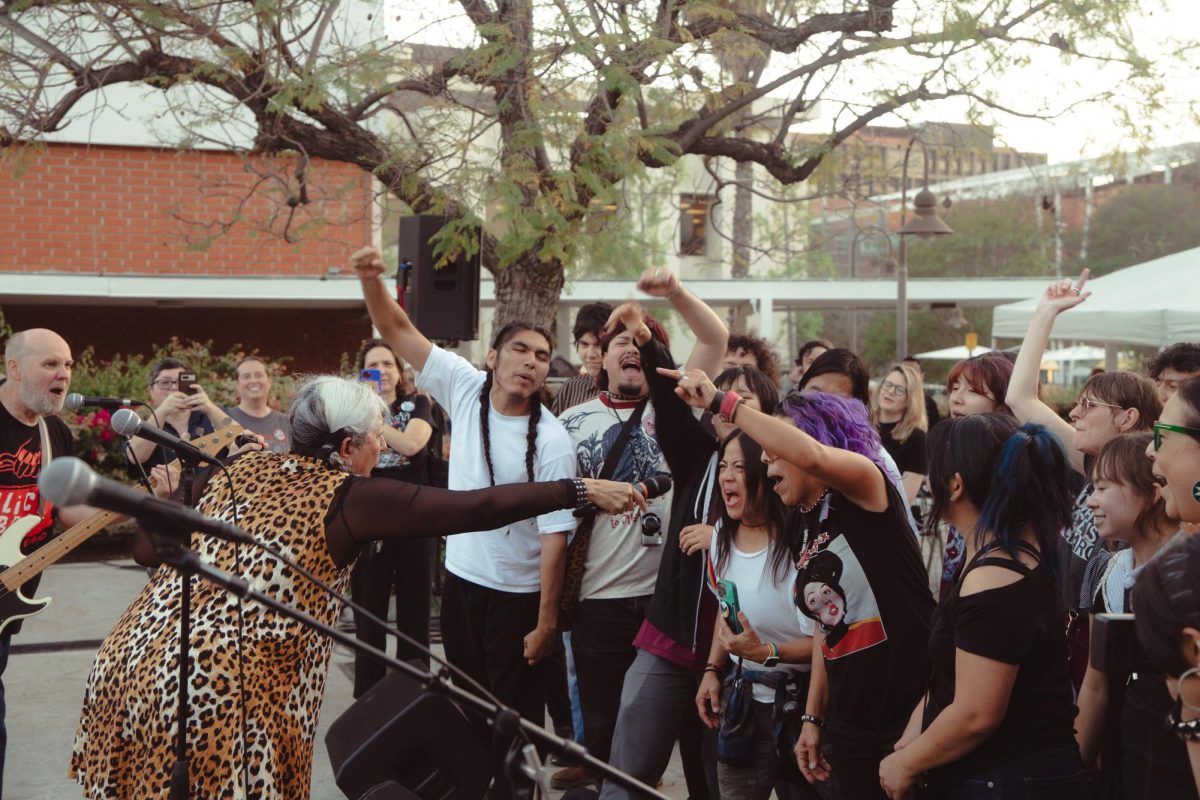



Queer hardcore punk band Trap Girl are a key component of the vast world of punk within Los Angeles, California. They bring glamour, violence, and collective chaos to the heavy sound of the underground scene by leaning into the camp genre, straight out of a John Waters film.
The band is led by the lead singer, Drew Arriola-Sands, a trans woman herself who explores her perspective in depth through leaning into an essence that is rooted in her own experience. She is vulnerable in her lyrical prose, yet also maintains a kind of attitude that goes against convention and takes the power back from the oppressor.
Every show, her hair is done up in a ’60s beehive, wearing a black dress and stilettos. She is quick-witted and readily able to interact with the crowd in an often comedic way.
“It’s not a fake character or a drag queen, that’s me, I don’t put it on and take it off, I just feel playful and frisky on stage,” Arriola-Sands said.
The band goes against systemic oppression by protesting on stage and calling out injustices. They call out transphobia, violence against women, and other injustices in their lyrics and at their shows, no matter who may be watching. This is needed in the punk community, since it has been notoriously plagued by fascist “skinheads” who go against everything the genre stands for, which is freedom of expression.
“One way to do that is by protesting, and if you’re a musician like me, you sing about it, and you scream about it because you want people to be protected, and you want people to stop being killed and beaten for being trans or gay or undocumented.”
Their unique, unapologetic attitude towards transphobia and marginalization focuses on how these systems must be dismantled. They are a band that adopts the idea of being the opposite of what is expected of society, going against the grain, and owning your individuality.
With songs like “Transwomen and Chokeholds” and “Baddest Bitch,” Trap Girl sets themselves apart because of how they embrace being a different aspect of such a scene.

“That’s what punk is to me, to fight for others who can’t fight for themselves and to be tough and crazy, but also compassionate and accepting,” Arriola-Sands said.
They use mystical, pop-influenced melodies to express their story from a queer perspective and focus on subject matters that are relevant to the queer community. Their music explores themes such as reclaiming power from those who oppress, fighting against predators, queer struggles, and rejection. It provides a chance for the punks who feel like genuine outcasts to feel seen in the community.
“I do meet a lot of people who identify like that, as an outcast or an outsider, and I definitely was that and still am,” Arriola-Sands said.
The singer even expressed how the first concert she saw was Bratmobile in 2001. This had a significant effect on her creation of the band, and gave her an overall taste of the style of music she’d go on to make. This aligns with her influence, which comes from a wide range of bands, yet are most notably influenced by the riot grrrl scene of the 90s.
“We’re not traditional ‘punk;’ I sing, we have hooks, we have a pop element to ourselves, and sometimes they don’t like that in the underground punk scene,” Arriola-Sands said. “They want it all to sound the same.”
She said that one of her biggest influences when creating Trap Girl was the Germs, discovering them “late in life” when she was 26. She also mentions other influences: Betty Blowtorch, The Gits, and GG Allin, although she is not proud of the latter, since he is “problematic” and “has not aged well.” Yet, what she does take from Allin and other polarizing groups is “the darker side of music and the confessional style of punk that has the ability to shock.”